Digital transformation projects (whether AI implementations, custom software builds, or process automation roadmaps) hinge on one universal challenge: bringing complex systems together in a predictable way that delivers business outcomes.
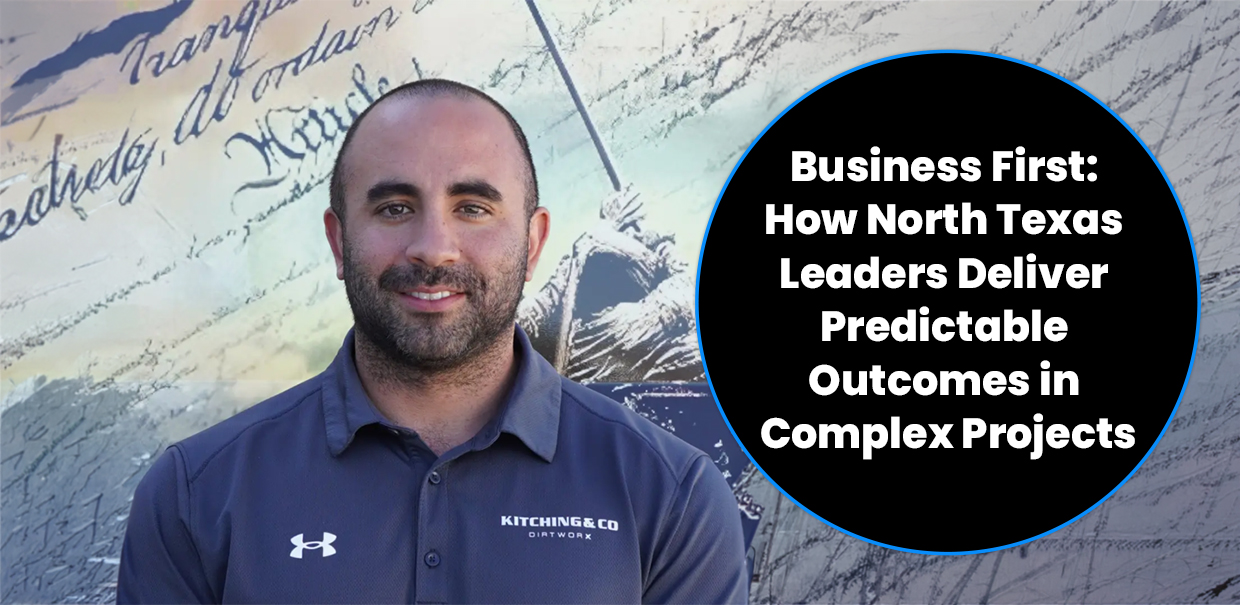
To explore how disciplined execution plays out in another high-stakes environment, we spoke with Brian Tetrault, co-founder of Kitching & Co. Kitching & Co Dirtworx is the #1-rated excavation contractor in the Dallas-Fort Worth Metroplex, self-performing every phase of horizontal construction (excavation, underground utilities, and concrete work).
Brian’s insights into process control, accountability, and execution discipline offer parallels that business leaders (especially those driving digital transformation) can learn from.
Q: 7T emphasizes a “Business First, Technology Follows” philosophy. In infrastructure projects, how do you apply a similar business-first mindset before execution begins?
Brian Tetrault: Every project starts with clear alignment on goals, constraints, and outcomes. Before we touch equipment or plans, we define the problem we’re solving (whether that’s risk reduction, cost predictability, or schedule certainty).
That means digging into the actual business drivers: “What happens if this utility install runs late?” or “How does this excavation impact our downstream schedule?” When you understand the business impact first, the technical or execution decisions become far more deliberate.
Q: What does execution discipline look like in practice when you’re responsible for every major phase of horizontal construction?
Brian Tetrault: Discipline is about eliminating ambiguity.
By self-performing excavation, underground utilities, and concrete under one contract, we own the full sequence (not just a single piece). That gives us control over timing, quality, and resource alignment in a way subcontracted models often can’t.
When everyone reports up a unified plan, you avoid finger-pointing and drive predictability. That’s a business outcome: fewer re-work costs, smoother timelines, and more confidence in delivery.
Q: Accountability is a theme both in heavy infrastructure and in large technology rollouts. What accountability levers work best for you?
Brian Tetrault: Clarity and ownership.
When you’re contracting multiple vendors, accountability dilutes. By keeping work bundled under one roof, decisions are faster and responsibilities are clear. Everyone knows which outcomes they’re accountable for (and that removes friction).
This translates directly to any transformation program: define roles tightly, communicate expectations often, and don’t let gray areas develop where issues can hide.
Q: Finally, what advice would you give to business leaders managing complex implementation initiatives (whether in software development or physical infrastructure)?
Brian Tetrault: Start with outcome clarity, then map your sequence backward from that target.
Too many projects begin with a tool or a vendor in mind. The companies that succeed ask: “What business result must happen?” Then they design the execution strategy to get them there, with checkpoints that validate direction continuously.
That mindset (business before execution) is the key to predictable delivery, no matter the domain.